I’ve been obsessed with my accent for many years. I have been told it’s neutral and that that’s good because it shouldn’t be regional sounding. No one, for the most part, beyond a few initial phrases, takes me for a native speaker, although I do seem to pass for a heritage speaker despite the fact that my looks often override everything that comes out of my mouth. Online, people I’ve just met, without being able to see me, often tell me I sound like a native, although not from their country, but nonetheless, that’s the biggest compliment I could get and it’s very satisfying. Considering the fact I’ve acquired the sound system in the U.S. (through the Cuban community in Miami) in late childhood and have never lived for an extended period out of the country, I have plenty to be proud of. However, the concern about my accent has persisted until recently.
A few months ago, in a conversation with my husband, I came to realize that my situation isn’t as unique or particular to a non-native in the U.S. as I thought. My husband, who is originally from Colombia has been here a long time now without regular contact with others from there. In fact, he really only speaks Spanish with me and the Mexicans with whom he works. Over the years he apparently has lost his Colombian accent from being in a country where one gets exposed to a variety of accents. No one can tell where he is from, even Colombians, who have a hard time believing he was born and raised there.
So, if a native speaker who was brought up in the language can no longer be recognized as a member of his ‘own’ speech community because of prolonged contact with a variety of other accents, I shouldn’t feel bad about my own perceived shortcoming.
Showing posts with label bicultural experiences. Show all posts
Showing posts with label bicultural experiences. Show all posts
Tuesday, June 21, 2011


Saturday, April 23, 2011
Shifting to English
Just a few days ago I came to realize that I have been slowly shifting to English only instead of trying to use Spanish on a regular basis. There is nothing pushing or forcing me to use Spanish. After all, I’m the U.S. and English is my first and primary language. English is way too convenient, even comfortable, to make any effort to continually use Spanish when I don’t have to. And I never have to. However, if I want to keep my fluency sharp and maintain my skills, there can’t be any giving into complacency. But this had never been an issue because I’ve always been extremely motivated, driven, and as some people who know me have described it, like a bulldozer.
Up until a few years ago as I had for most of my life, I did everything I could to make Spanish a part of my everyday life. I had gotten satellite TV to have a couple dozen channels in Spanish, listened only to Spanish language radio in my area, made friends from Latin America, spoke only Spanish to my husband (who is from South America), addressed bilingual people in Spanish before English could be established in the conversation, read newspapers and magazines in the language-anything to create a mini-immersion experience for myself. So, where did my motivation go?
Up until a few years ago as I had for most of my life, I did everything I could to make Spanish a part of my everyday life. I had gotten satellite TV to have a couple dozen channels in Spanish, listened only to Spanish language radio in my area, made friends from Latin America, spoke only Spanish to my husband (who is from South America), addressed bilingual people in Spanish before English could be established in the conversation, read newspapers and magazines in the language-anything to create a mini-immersion experience for myself. So, where did my motivation go?
Originally, my primary motivation had been integrative, a longing to be accepted as a part of the local Latin community as a legitimate speaker of the language. I had many successes as well as failures that come with trying to cross cultural borders within the U.S.
Even though my Spanish is a part of my identity, and it still is important that others are aware of it, it doesn’t concern me as much as it did before. Through my husband’s influence I have lessened my contact with the community and have come to feel that I don’t always have to use Spanish as a social marker. I have seen that because he no longer has emotional ties to his homeland (he feels more American than Colombian, which other Latins can’t or don’t want to understand-even seeing it as some sort of betrayal to his ‘roots’) much less to the local Hispanic community, and perhaps as a consequence doesn’t take advantage of using his native language as a social marker either, and therefore faces a certain type of rejection, why should I be concerned about it? It’s not the exact same thing, but there is some overlap, that of linguistic and cultural crossings. In observing his experiences with them I’ve learned to downplay their impact, just as he has.
As for using more English when I could use Spanish for whatever reason, I know I’m bilingual enough that my fluency doesn’t fade with time but I’m more picky about when, with whom and for what purpose I use Spanish. Home language is routine and store or restaurant transactions are not challenging, linguistically (even when it’s complicated). They don’t present any type of ‘practice’. The only challenge in the latter would be to not get acknowledged as a ‘learner’. What is more interesting is explaining and solving a problem by phone, like TV repair, billing or banking problems, or arranging for some warranty work on the house. That at least requires more thinking on your feet and using some semi-technical terms. But that’s the good thing about being bilingual in the US-using one language or another when you want to and for me that’s a way to keep from shifting back to only English.
Wednesday, March 9, 2011
The Linguistic Loyalty of Non-Native Speakers
As non-native speakers who come to the language without the cultural influence of family, it isn’t unusual for us to develop a special affinity for a particular country and its way of speaking (accent, regionalisms, etc.). Sometimes it’s that first contact through traveling abroad, an inspirational teacher, a close friend or sweetheart that becomes a window on another culture and its sounds. My orientation started out quite naturally towards Cuban Spanish, since I grew up in Miami Central Florida , it seemed every couple of years another region influenced me. Next it was Venezuela , a country I “adopted” for a stretch of 10 years, later Puerto Rico , Nicaragua and Colombia
After classes were over, a small group of students were still on campus, chatting as they waited for a ride home. They knew me, although not very well, and that I spoke Spanish and as I passed by engaged me in their conversation. The topic soon turned to vocabulary differences among their countries- Venezuela , Colombia , Puerto Rico and Honduras
When I have thought back on that conversation, I was pleased to know that I had fully internalized these words or phrases to the point that I reacted simultaneously with the native speakers whose regionalisms I was familiar with. However, it did cause me to wonder about issues of linguistic identity that didn't seem easily resolved and that I continue to ponder.
Friday, December 17, 2010
A Day of Immersion in Miami
On a couple of occasions I have taken former students of mine to Miami for a full day of Spanish practice. I got started doing this after discussions with classes about field trips and going abroad. What better place than Miami for a taste of Latin America without leaving the country? However, I only took people who had had at least 2 semesters of study because true beginners would be even more overwhelmed and not get that much out of it. I was hoping to further motivate these students by sharing a small part of what I knew of the language and culture and letting them experience some of it themselves.
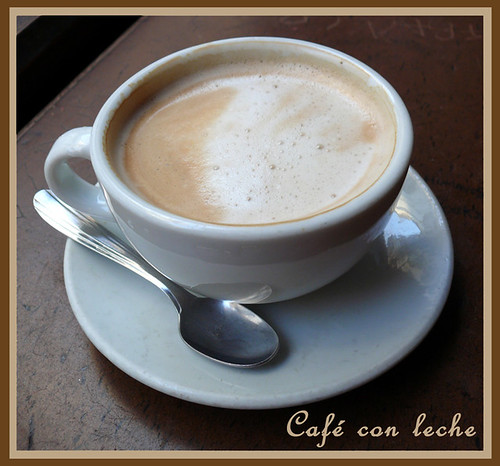
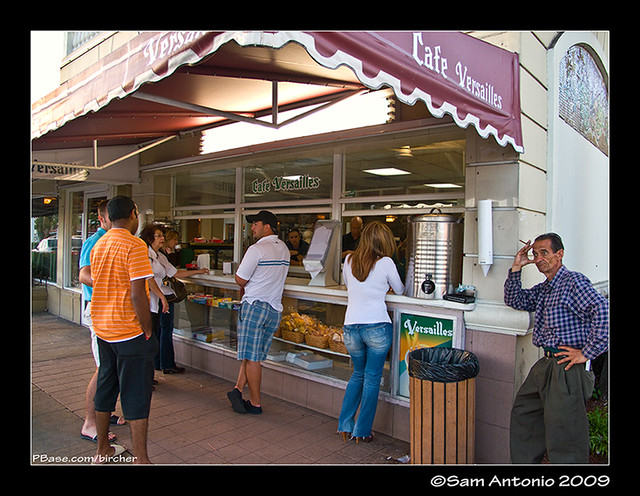
The week beforehand, I went down, planned my route, made some arrangements and recorded some of the most popular songs of the moment for them to listen to on the way for ambiance and to learn some phrases by singing along with the chorus (I printed the words out). On the itinerary were a tour of Little Havana, stops at a Cuban bakery, a Cuban restaurant, a Colombian bookstore, a Latin supermarket (suggested by the 2 ladies I took on this trip), and a Colombian café. I was very organized - everything planned down to the minute. I thought it would go exactly as expected. The morning began with excitement and anticipation. At 7 am sharp, I picked up my passengers at their house. It was too early in the morning for salsa music so I held off on using the tape I made. There wasn't much conversation because of their limited Spanish but I stuck to my promise to not speak English (even if they did). We ended up using repetitive questions like ¿Quieres? or ¿Te gusta?. But no matter. Repetition is good, right? By the time we got to Miami, we were a bit hungry, so first stop-a bakery for Cuban coffee. I figured I would have to order but since they knew the numbers I was hoping they'd listen for our ticket number. Not this time around. No, this wasn't going to be linguistic at all. This was my first indication that I had taken this cultural familiarity for granted. While I was ready to order and eat they seemed to be entranced by another world infused with it's own exotic sights and smells. "What's this?" they asked, peering into the glass case filled with unfamiliar looking sweets. "What are you going to get?" "What do you recommend?" They sat back and watched it all unfold in front of them. I got the feeling they were experiencing sensory overload. I got them café con leche, pastelitos de queso y otros de guayaba. They did say they enjoyed the food without much more commentary, so I left it at that. We were already on Calle Ocho the main artery through La Pequeña Habana, and site of an annual festival every March, which was the next leg of our tour. This part was mostly for its visual impact of seeing most store names and signs in Spanish, ending with a quick drive by Máximo Gómez Park, also known as Domino Park.
Now we were on our way to the bookstore. I chose the place, primarily because the owner, whom I had become friendly with over the years, would be open to having Spanish-language learners attempt to speak with her. When we got there, I introduced everyone, she greeted them warmly with a customary kiss, then launched into a conversation about how they were enjoying the local weather. Being greeted with a kiss by a stranger, albeit a woman, took them slightly by surprise, but they went with the flow. However, the Spanish went right over their heads and relied on me to communicate for them. The small, compact store intrigued them as they started to wander around. One shelf label caught their eye: Literatura latinoamericana. "Professor, why doesn't it say 'española'?" I explained how that word would refer to something from Spain exclusively. That's when I realized that the little things I have always taken as a given were completely new, 'foreign', if you will, from their monocultural point of view. This was supposed to be, after all, the whole point of venturing down to Miami but I hadn't ever, up until that moment, seen what was completely normal to me, through the eyes of someone who was only familiar with American (USA) culture. There were more cross-cultural differences and misunderstandings to come.
It didn't take long for them to have their fill of browsing in one place. They wanted to go exploring the other shops and eateries, all Latino, down the long strip mall that the bookstore was a part of. Sure, I thought-why not? There's plenty to see. As they were about to walk out the door, I heard, "Say bye to your friend for us." Little alarm bells went off in my head. What? You can't do that, I said. You have to say good-bye personally, was all I could get out of my mouth, but they were gone. A bit embarrassed and feeling like I had been left holding the bag, I went to the owner and apologized that they left. I began to feel like a cultural ambassador. First I explained their cultural viewpoint; she was of course, graciously understanding. Then, sensing a teachable moment, I went outside to find the ladies to explain to them the importance of returning and saying good-bye
If it was only that simple. Now, a new snag presented itself. Outside, I didn't see them. Could they have gone into a store? But which one? There were more than a dozen. I started to panic. This was the same summer that Chandra Levy had disappeared. While we weren't in a particularly dangerous area-I wouldn't have gone- but they were tourists, didn't speak the language or know the local culture and could get into trouble. Just a minute had gone by when they emerged from a shop nearby. I called them over. As we were beginning to talk about returning to the bookstore, a suspicious looking man approached us. My concerns about my guests were heightened. He spoke to them in Spanish, quickly switched to English, trying to engage them in conversation and apparently asking for money. My instincts were to dismiss him and get away but they made small talk for a few moments but since none of us showed interest in continuing or giving him anything, thankfully, he left on his own. It took about 10 minutes to explain about polite greetings and leave-takings, but they understood and we all went back to the bookstore and said our good-byes and thanked the owner for her hospitality.
Still on schedule, we headed for the Cuban restaurant I had in mind. It is a very popular place but I didn't count on it being so packed, not to mention there was unexpected road construction on the corner, making it difficult to get in and out of the parking lot. Switch to plan B- another nearby local restaurant chain, less formal and less crowded at any given hour of the day. I was still full from the morning's pastry but they were ready for a bite to eat. My best option was just a cup of caldo gallego. They each ordered a sándwich cubano. When it arrived, I couldn't figure out why they were surprised at its large size, as they considered it. I guessed that's why they could only eat half of it. We took our time, lingering over our meal, then a new question to think about: "How come they haven't brought us the check?" Mmmmmm. This was interesting to me on a couple of levels. Certainly this is not usual in the U.S., especially in casual places like this but we were not in a hurry so I was struck by their comment. Were they ready to go? Did they think the service was bad because of this? I explained the custom and differences in viewpoint in both cultures, which they appreciated and found eye-opening. I realized they were learning the kinds of things I had hoped they would.
After this, we then went on to a Latin supermarket. It was a request my passengers had made the week before. The place was bustling with activity. Spanish was floating all around-easily overheard conversations, people ordering from the butcher, announcements about specials over the speakers. They strolled down the aisles observing the tropical produce on display, the labels and signs in Spanish, imagining what it all meant. Just about everything there was from Latin America- common foods, popular brands, but still recognizable by its name or packaging- until they came across bags of mate. I knew about it but had never actually tasted it, but still I could give them an idea. After a half an hour of wandering around, they were ready to move on to the last stop- a Colombian café.
I had met the owner some time before and would usually drop by to say hi to her whenever I was in Miami. It was a kiosk separate from the adjacent shopping center, with its own little patio, white plastic tables (with built-in umbrella for shade) and chairs for seating. We just plopped our tired selves down to take a breather while we waited for her to come over and say hi. I introduced everyone. Aside from "Hola, ¿cómo estás?" that was the extent of interaction in Spanish between the two parties. Since my friend didn't speak much English, and my former students equally limited in Spanish, I served as interpreter. But it was almost 3pm; the day was already over. Although they had to use some English with me during the day, the mental exhaustion from being semi-mute for eight hours left them feeling worn out and more than ready to head back home. I couldn't help but sympathize. I, too, was quite spent from constant driving and still facing another 3 hours on the road.
On the way back, I mulled over the events of the day, analyzing what had happened, particularly at the restaurant. I wondered about their reactions and found myself comparing cross-cultural differences from two points of view: that of a learner, experiencing another world for the first time and that of a (Hispanic) culture-bearer observing an outsider. As I thought about it, I realized I was seeing where each other's perception lies from a different standpoint. It was a strange third space I hadn't experienced before- somewhere in between worlds and yet not fully in either. "Wow", I thought to myself, "supongo que, como dice la canción de Facundo Cabral, 'No soy de aquí ni soy de allá.'".
The week beforehand, I went down, planned my route, made some arrangements and recorded some of the most popular songs of the moment for them to listen to on the way for ambiance and to learn some phrases by singing along with the chorus (I printed the words out). On the itinerary were a tour of Little Havana, stops at a Cuban bakery, a Cuban restaurant, a Colombian bookstore, a Latin supermarket (suggested by the 2 ladies I took on this trip), and a Colombian café. I was very organized - everything planned down to the minute. I thought it would go exactly as expected. The morning began with excitement and anticipation. At 7 am sharp, I picked up my passengers at their house. It was too early in the morning for salsa music so I held off on using the tape I made. There wasn't much conversation because of their limited Spanish but I stuck to my promise to not speak English (even if they did). We ended up using repetitive questions like ¿Quieres? or ¿Te gusta?. But no matter. Repetition is good, right? By the time we got to Miami, we were a bit hungry, so first stop-a bakery for Cuban coffee. I figured I would have to order but since they knew the numbers I was hoping they'd listen for our ticket number. Not this time around. No, this wasn't going to be linguistic at all. This was my first indication that I had taken this cultural familiarity for granted. While I was ready to order and eat they seemed to be entranced by another world infused with it's own exotic sights and smells. "What's this?" they asked, peering into the glass case filled with unfamiliar looking sweets. "What are you going to get?" "What do you recommend?" They sat back and watched it all unfold in front of them. I got the feeling they were experiencing sensory overload. I got them café con leche, pastelitos de queso y otros de guayaba. They did say they enjoyed the food without much more commentary, so I left it at that. We were already on Calle Ocho the main artery through La Pequeña Habana, and site of an annual festival every March, which was the next leg of our tour. This part was mostly for its visual impact of seeing most store names and signs in Spanish, ending with a quick drive by Máximo Gómez Park, also known as Domino Park.
Now we were on our way to the bookstore. I chose the place, primarily because the owner, whom I had become friendly with over the years, would be open to having Spanish-language learners attempt to speak with her. When we got there, I introduced everyone, she greeted them warmly with a customary kiss, then launched into a conversation about how they were enjoying the local weather. Being greeted with a kiss by a stranger, albeit a woman, took them slightly by surprise, but they went with the flow. However, the Spanish went right over their heads and relied on me to communicate for them. The small, compact store intrigued them as they started to wander around. One shelf label caught their eye: Literatura latinoamericana. "Professor, why doesn't it say 'española'?" I explained how that word would refer to something from Spain exclusively. That's when I realized that the little things I have always taken as a given were completely new, 'foreign', if you will, from their monocultural point of view. This was supposed to be, after all, the whole point of venturing down to Miami but I hadn't ever, up until that moment, seen what was completely normal to me, through the eyes of someone who was only familiar with American (USA) culture. There were more cross-cultural differences and misunderstandings to come.
It didn't take long for them to have their fill of browsing in one place. They wanted to go exploring the other shops and eateries, all Latino, down the long strip mall that the bookstore was a part of. Sure, I thought-why not? There's plenty to see. As they were about to walk out the door, I heard, "Say bye to your friend for us." Little alarm bells went off in my head. What? You can't do that, I said. You have to say good-bye personally, was all I could get out of my mouth, but they were gone. A bit embarrassed and feeling like I had been left holding the bag, I went to the owner and apologized that they left. I began to feel like a cultural ambassador. First I explained their cultural viewpoint; she was of course, graciously understanding. Then, sensing a teachable moment, I went outside to find the ladies to explain to them the importance of returning and saying good-bye
If it was only that simple. Now, a new snag presented itself. Outside, I didn't see them. Could they have gone into a store? But which one? There were more than a dozen. I started to panic. This was the same summer that Chandra Levy had disappeared. While we weren't in a particularly dangerous area-I wouldn't have gone- but they were tourists, didn't speak the language or know the local culture and could get into trouble. Just a minute had gone by when they emerged from a shop nearby. I called them over. As we were beginning to talk about returning to the bookstore, a suspicious looking man approached us. My concerns about my guests were heightened. He spoke to them in Spanish, quickly switched to English, trying to engage them in conversation and apparently asking for money. My instincts were to dismiss him and get away but they made small talk for a few moments but since none of us showed interest in continuing or giving him anything, thankfully, he left on his own. It took about 10 minutes to explain about polite greetings and leave-takings, but they understood and we all went back to the bookstore and said our good-byes and thanked the owner for her hospitality.
Still on schedule, we headed for the Cuban restaurant I had in mind. It is a very popular place but I didn't count on it being so packed, not to mention there was unexpected road construction on the corner, making it difficult to get in and out of the parking lot. Switch to plan B- another nearby local restaurant chain, less formal and less crowded at any given hour of the day. I was still full from the morning's pastry but they were ready for a bite to eat. My best option was just a cup of caldo gallego. They each ordered a sándwich cubano. When it arrived, I couldn't figure out why they were surprised at its large size, as they considered it. I guessed that's why they could only eat half of it. We took our time, lingering over our meal, then a new question to think about: "How come they haven't brought us the check?" Mmmmmm. This was interesting to me on a couple of levels. Certainly this is not usual in the U.S., especially in casual places like this but we were not in a hurry so I was struck by their comment. Were they ready to go? Did they think the service was bad because of this? I explained the custom and differences in viewpoint in both cultures, which they appreciated and found eye-opening. I realized they were learning the kinds of things I had hoped they would.
After this, we then went on to a Latin supermarket. It was a request my passengers had made the week before. The place was bustling with activity. Spanish was floating all around-easily overheard conversations, people ordering from the butcher, announcements about specials over the speakers. They strolled down the aisles observing the tropical produce on display, the labels and signs in Spanish, imagining what it all meant. Just about everything there was from Latin America- common foods, popular brands, but still recognizable by its name or packaging- until they came across bags of mate. I knew about it but had never actually tasted it, but still I could give them an idea. After a half an hour of wandering around, they were ready to move on to the last stop- a Colombian café.
I had met the owner some time before and would usually drop by to say hi to her whenever I was in Miami. It was a kiosk separate from the adjacent shopping center, with its own little patio, white plastic tables (with built-in umbrella for shade) and chairs for seating. We just plopped our tired selves down to take a breather while we waited for her to come over and say hi. I introduced everyone. Aside from "Hola, ¿cómo estás?" that was the extent of interaction in Spanish between the two parties. Since my friend didn't speak much English, and my former students equally limited in Spanish, I served as interpreter. But it was almost 3pm; the day was already over. Although they had to use some English with me during the day, the mental exhaustion from being semi-mute for eight hours left them feeling worn out and more than ready to head back home. I couldn't help but sympathize. I, too, was quite spent from constant driving and still facing another 3 hours on the road.
On the way back, I mulled over the events of the day, analyzing what had happened, particularly at the restaurant. I wondered about their reactions and found myself comparing cross-cultural differences from two points of view: that of a learner, experiencing another world for the first time and that of a (Hispanic) culture-bearer observing an outsider. As I thought about it, I realized I was seeing where each other's perception lies from a different standpoint. It was a strange third space I hadn't experienced before- somewhere in between worlds and yet not fully in either. "Wow", I thought to myself, "supongo que, como dice la canción de Facundo Cabral, 'No soy de aquí ni soy de allá.'".
Thursday, October 8, 2009
A Double Standard for the Non-Native Speaker
When I was in Spain as a grad student I had a conversation with a relative of a Spanish friend about fishing. Since I had never talked about this topic before in Spanish, I didn't have a lot of vocabulary to describe things so I resorted to circumlocution and asked how to say them. One word I was at a loss for was 'bait'. I described it and was told to use "cebo". Of course after 15 years of hearing Latin American varieties and 10 years of speaking like this, I continued my story pronouncing the word as 'sebo'. I was stopped and told that I pronounced it wrong because 'sebo', with an 's', was a different word with a different meaning. Unfortunately I didn't know that word either so I asked about it and got the idea it meant 'fat' or 'grease'. But I insisted on pronouncing 'cebo' as it would be in any part of Latin America, arguing that millions of native speakers in the Americas pronounce this way and word pairs like these can be understood by context. Her reply was that she can understand them but can't understand me. This was ridiculous but I didn't want to make a scene (we were in public) and it wasn't worth the trouble seeing as this was someone with a preexisting bias, so I prounounced that ONE word, out of a full conversation that surely including other words with 'ce' or 'ci', as she asked.
The Spanish woman's statement that she understands Spanish speakers from Latin America but not me, got me thinking that for her, there is a double standard for the non-native or second language speaker who is not seen as having any legitimate claim to the language by way of family. He therefore supposedly falls under the authority of the native speaker with whom he interacts, regardless of his actual proficiency or fluency which might not be taken under consideration. As a consequence, in this case, she assumed that I should be speaking as she, a Spaniard, does because it is 'proper' , 'correct' or 'the real Spanish' . Because the language was thought to not be 'mine', my imitation of speakers outside her country or region was not acceptable but yet, in the end, we are pronouncing the same way. Although it is frustrating when this sort of thing happens, this person probably looked down her nose at Latin American speakers too and maybe thought she was doing me a favor in correcting me of my 'bad habits'. After all those other speakers can't help that they were born into the language. So even though I sound remarkably like them and even get asked by Spanish-speakers from Latin America if I have Spanish-speakers in my family, in this case, I was like a bastard child. Same sound but the wrong parents.
The Spanish woman's statement that she understands Spanish speakers from Latin America but not me, got me thinking that for her, there is a double standard for the non-native or second language speaker who is not seen as having any legitimate claim to the language by way of family. He therefore supposedly falls under the authority of the native speaker with whom he interacts, regardless of his actual proficiency or fluency which might not be taken under consideration. As a consequence, in this case, she assumed that I should be speaking as she, a Spaniard, does because it is 'proper' , 'correct' or 'the real Spanish' . Because the language was thought to not be 'mine', my imitation of speakers outside her country or region was not acceptable but yet, in the end, we are pronouncing the same way. Although it is frustrating when this sort of thing happens, this person probably looked down her nose at Latin American speakers too and maybe thought she was doing me a favor in correcting me of my 'bad habits'. After all those other speakers can't help that they were born into the language. So even though I sound remarkably like them and even get asked by Spanish-speakers from Latin America if I have Spanish-speakers in my family, in this case, I was like a bastard child. Same sound but the wrong parents.
Subscribe to:
Posts (Atom)